Silent Witness
This body of work explores the quiet tension and harmony between the man-made and the natural world, specifically focusing on ruins and unoccupied buildings where trees have become part of the scene, either encroaching on or surrounding what remains.
Presented in black and white, the images aim to strip away distraction and draw attention to texture, form, and the emotional resonance of abandonment and resilience.
Each structure once held purpose, shelter, and life. Now, they are left behind, walls collapsing, roofs open to the sky, while trees grow taller around them, sometimes breaking through their decay.
These juxtapositions speak to the passage of time, the impermanence of human effort, and the quiet persistence of nature.
The intention is not just to document these places, but to evoke a sense of stillness and reflection, to give voice to spaces that have long since fallen silent.
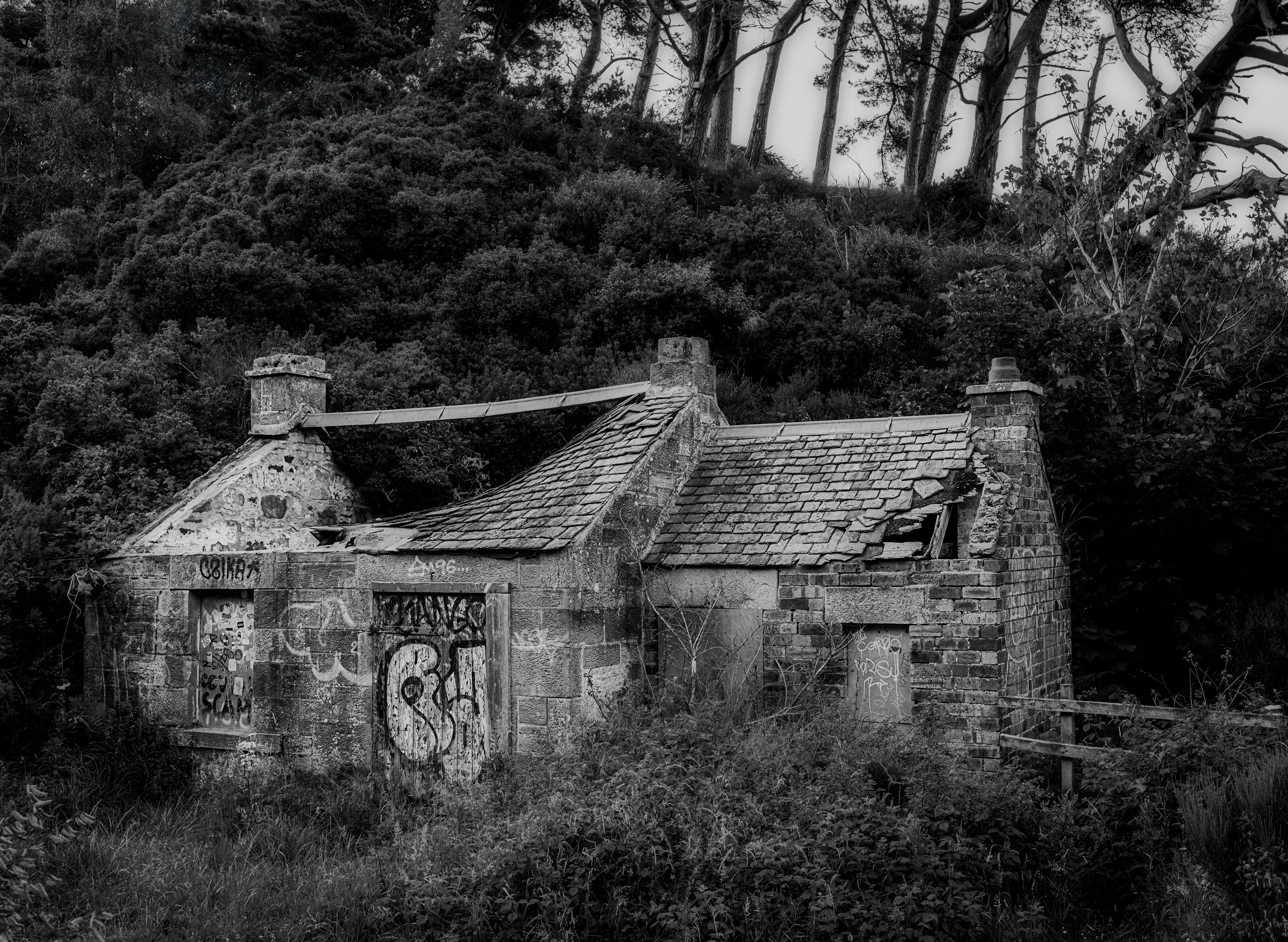
"Forgotten Shelter"
I like how nature reclaims what time leaves behind with this once-sturdy stone cottage now stands in quiet ruin, the state of the roof collapsing , the walls marked with graffiti, and wild growth creeping ever closer, creates an image of life in the past and now a silent witness to years gone by.
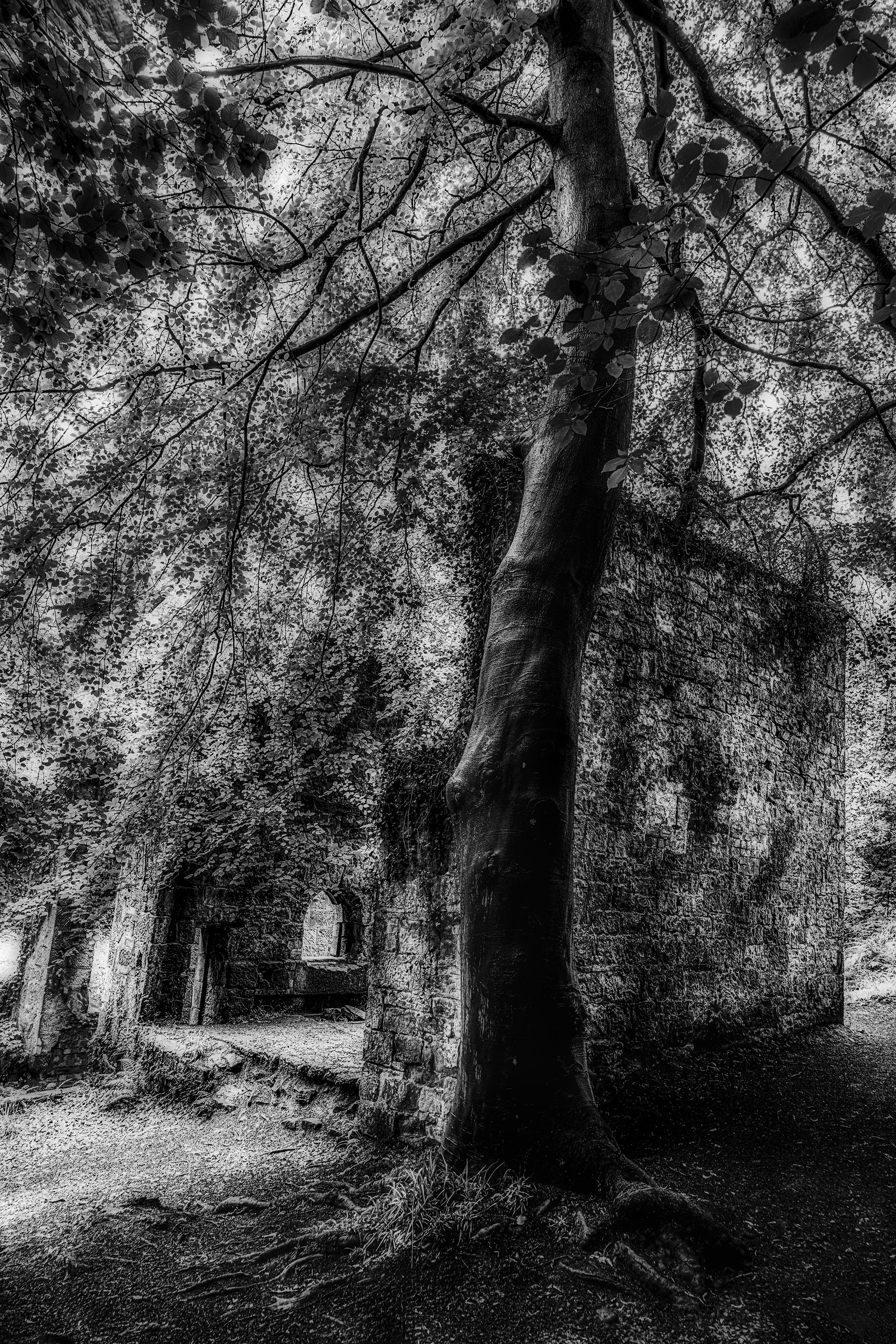
Roslin Glen: Echoes of the Past
Pictured here is one of the old buildings of the Gunpowder Mills at Roslin Glen. It's hard to imagine that this now tranquil woodland setting, shrouded in quiet and overgrown with nature’s reclaiming touch, was once home to Scotland’s largest gunpowder mill.
From 1803 to 1954, this site was a hive of industrial activity—busy, noisy, and dangerously volatile. Today, only fragments remain: weathered stone walls, softened by time and shadowed by the embrace of trees that now stand as silent witnesses to the transformation.
The contrast between past and present could not be starker.
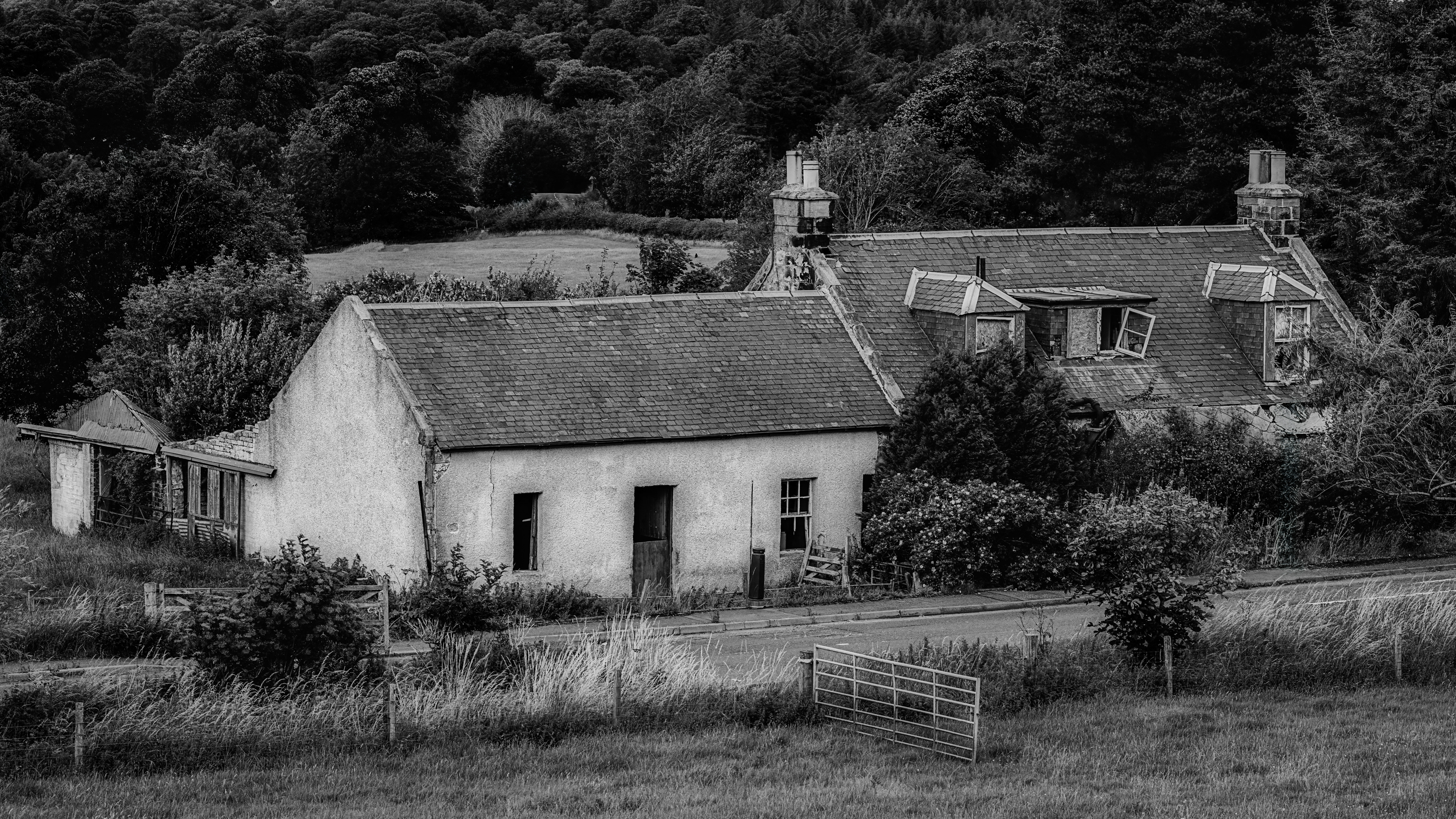
The Stillness of Abandonment
This old farmhouse at the top of Harper’s Brae, just a ten-minute walk from my home in Penicuik.
Sitting quietly on the corner of the B7026, with wide views towards the Pentland Hills, this building has always caught my eye.
Long abandoned, its crumbling walls and broken windows now share space with encroaching trees, tangled shrubs, and wild growth, nature slowly reclaiming what was once lived in.
I created four images to tell its story from different angles, highlighting both the decay and the beauty of its slow return to the earth.
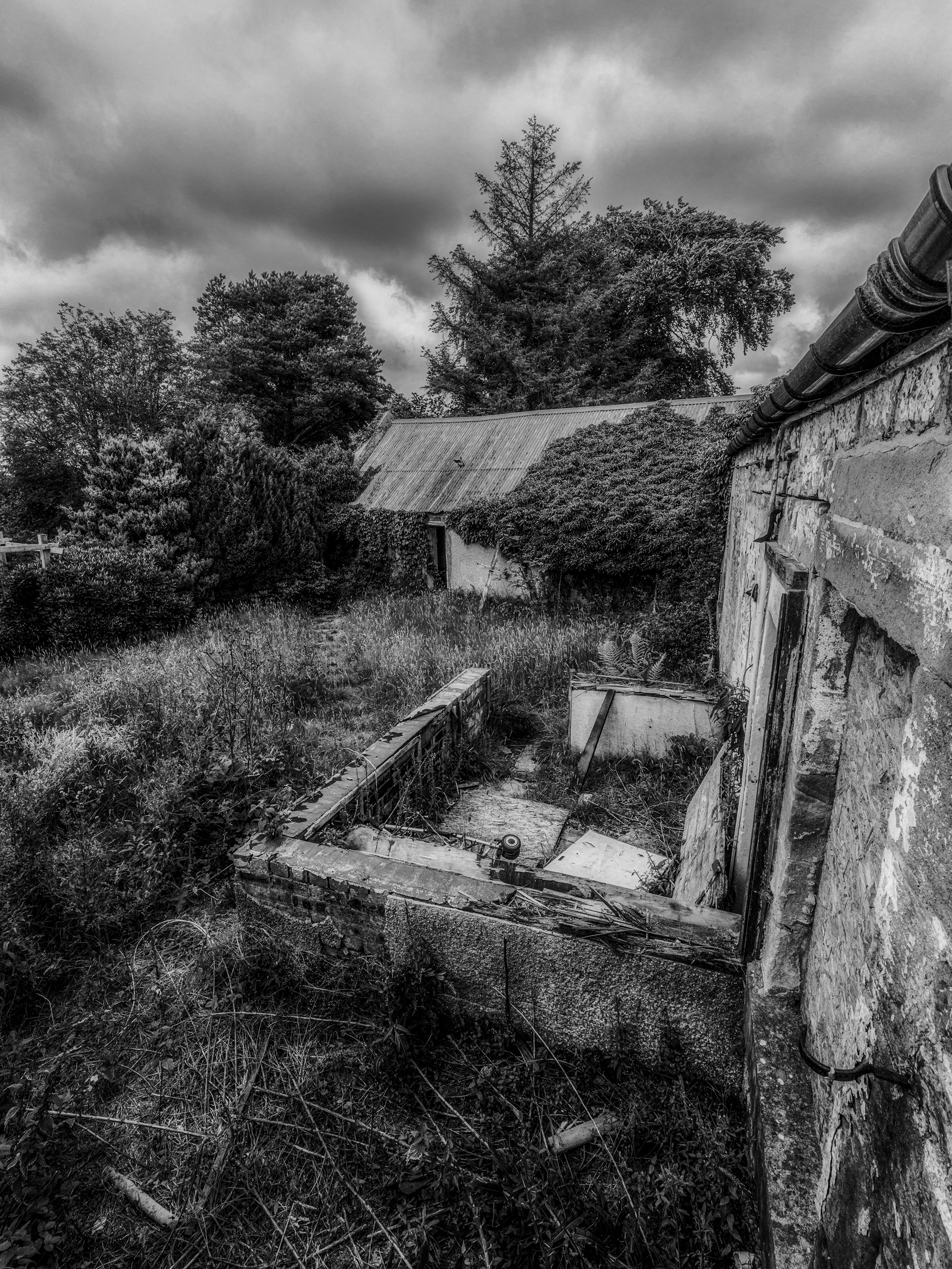
From behind the farmhouse, nature’s quiet reclamation is even more apparent. What was once a functional part of the home, perhaps a yard or outbuilding, now lies in ruin, choked by undergrowth. Bricks crumble, weeds thrive, and a rusted pipe still clings to the weathered stone wall.
Towering trees and overgrown shrubs stand as silent witnesses to time’s passage, while the sky broods above, adding drama to the scene. This image feels like a moment of stillness in the middle of a slow, inevitable transformation.
At the rear of the old farmhouse, nature’s patient hand has all but erased the memory of human presence. Ivy and tangled shrubs spill across the roof and doorway, softening the hard lines of what once was shelter.
There’s a hush here, a sense of time folding in on itself, as if the land is gently reclaiming its own. Standing in the long grass, I’m reminded that every ending is also a quiet beginning, written in the language of leaves and shadow
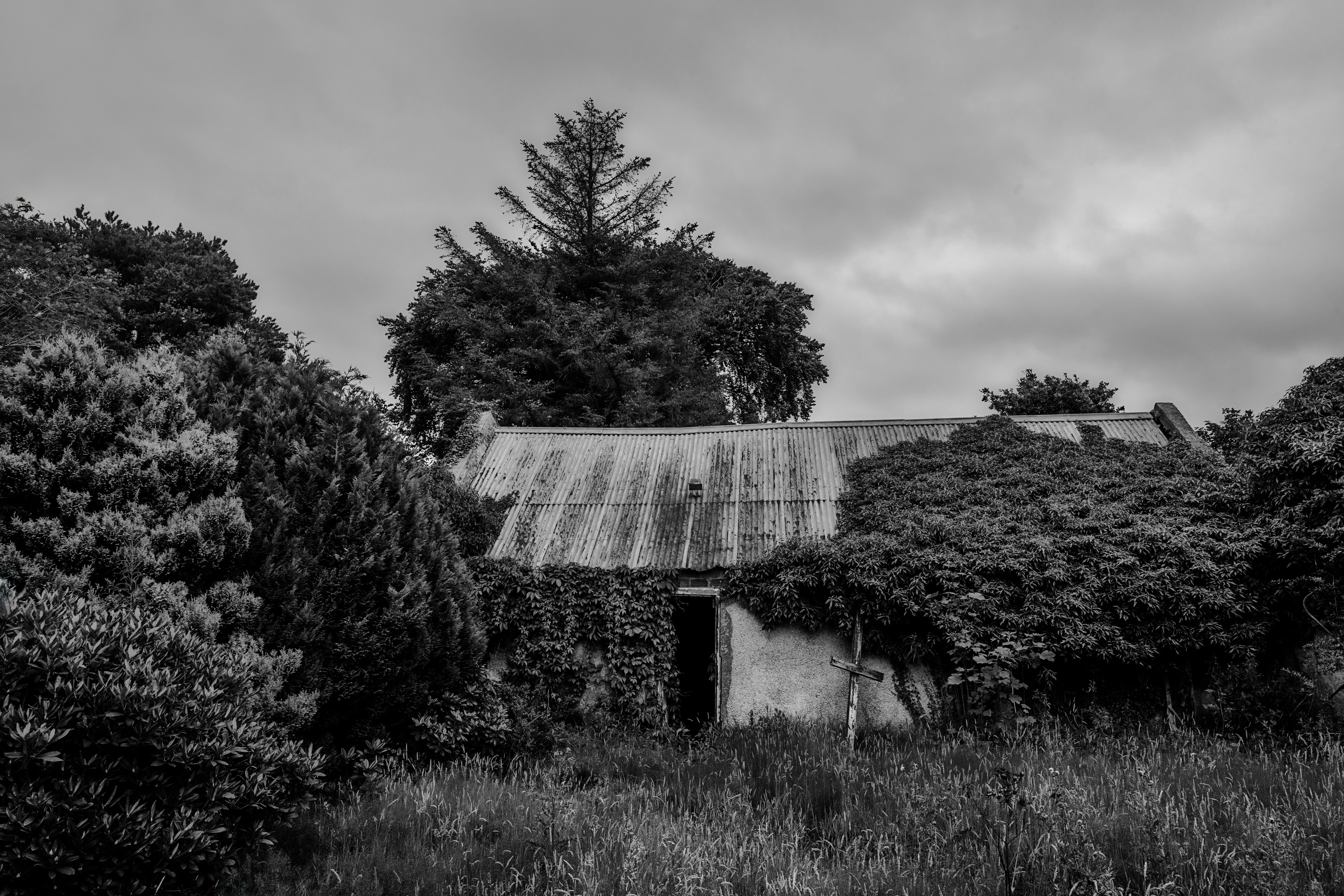
From the outside, the old farmhouse stands silent beneath a brooding sky, its gable wall rising like a memory against the encroaching wild. The roof sags, the windows are boarded, and the grass grows tall, softening the hard edges of what once was home.
There’s a quiet dignity here, even in decay. The chimney pots still reach upward, as if hoping for warmth that will never return.
All around, nature gathers, trees pressing close, shadows deepening, reminding me that time moves gently, and every ending leaves its mark on the land.
Sometimes, the most powerful stories are told not in words, but in the hush between walls and wind.
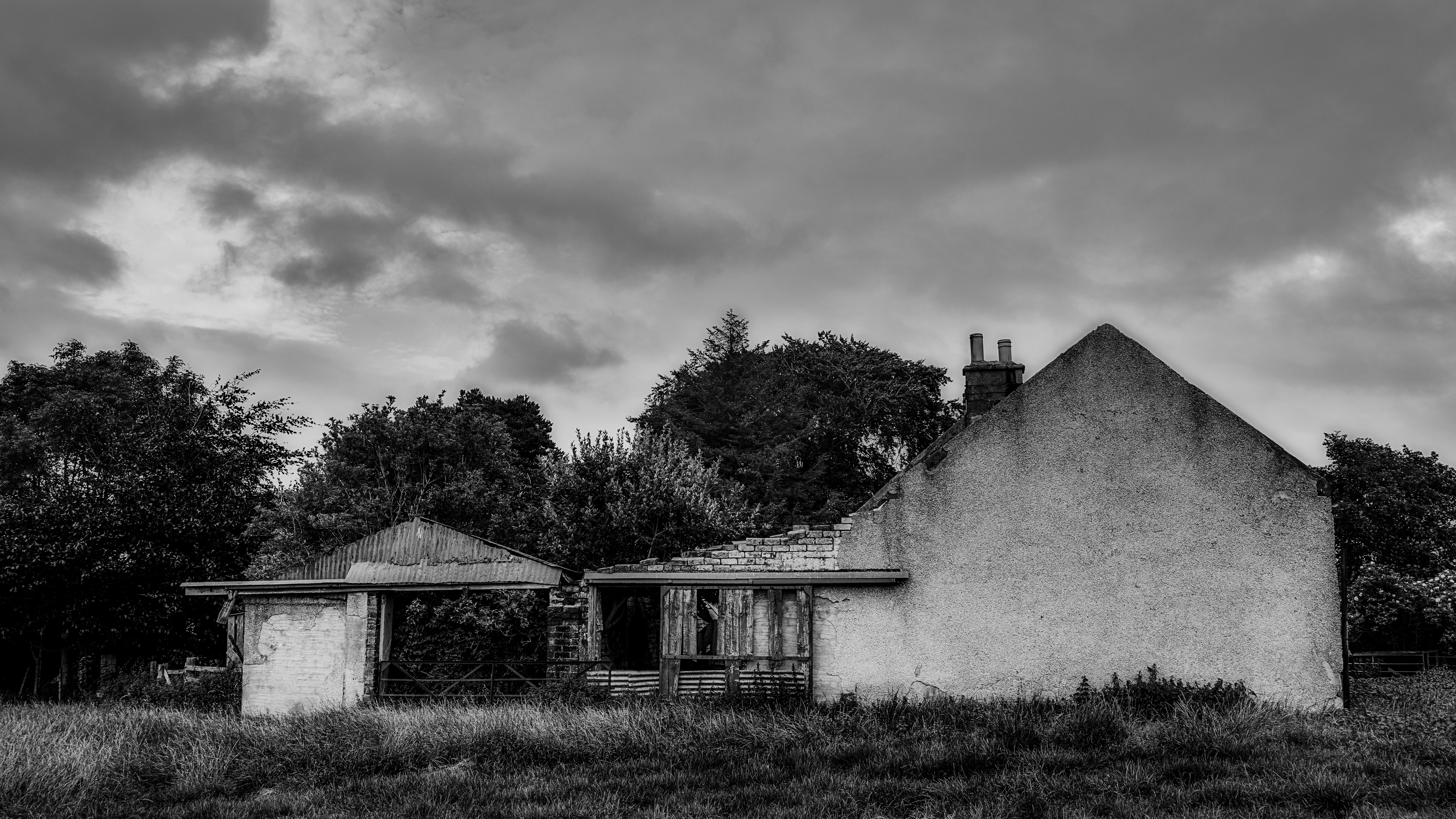
Haven at Murlough Bay, County Antrim.
Nestled in the quiet seclusion of Murlough Bay, County Antrim, this small bothy once offered refuge to farm labourers, itinerant workers, and travellers seeking shelter from the elements.
Its half door, once opening to warmth and company, now closes on a silence broken only by wind through the surrounding trees.
Stripped of colour in monochrome, the image lays bare the weathered textures of stone, slate, and timber, revealing the simple, enduring form of a building long past its working days, yet still holding its place in the landscape as a silent witness to lives once lived here.
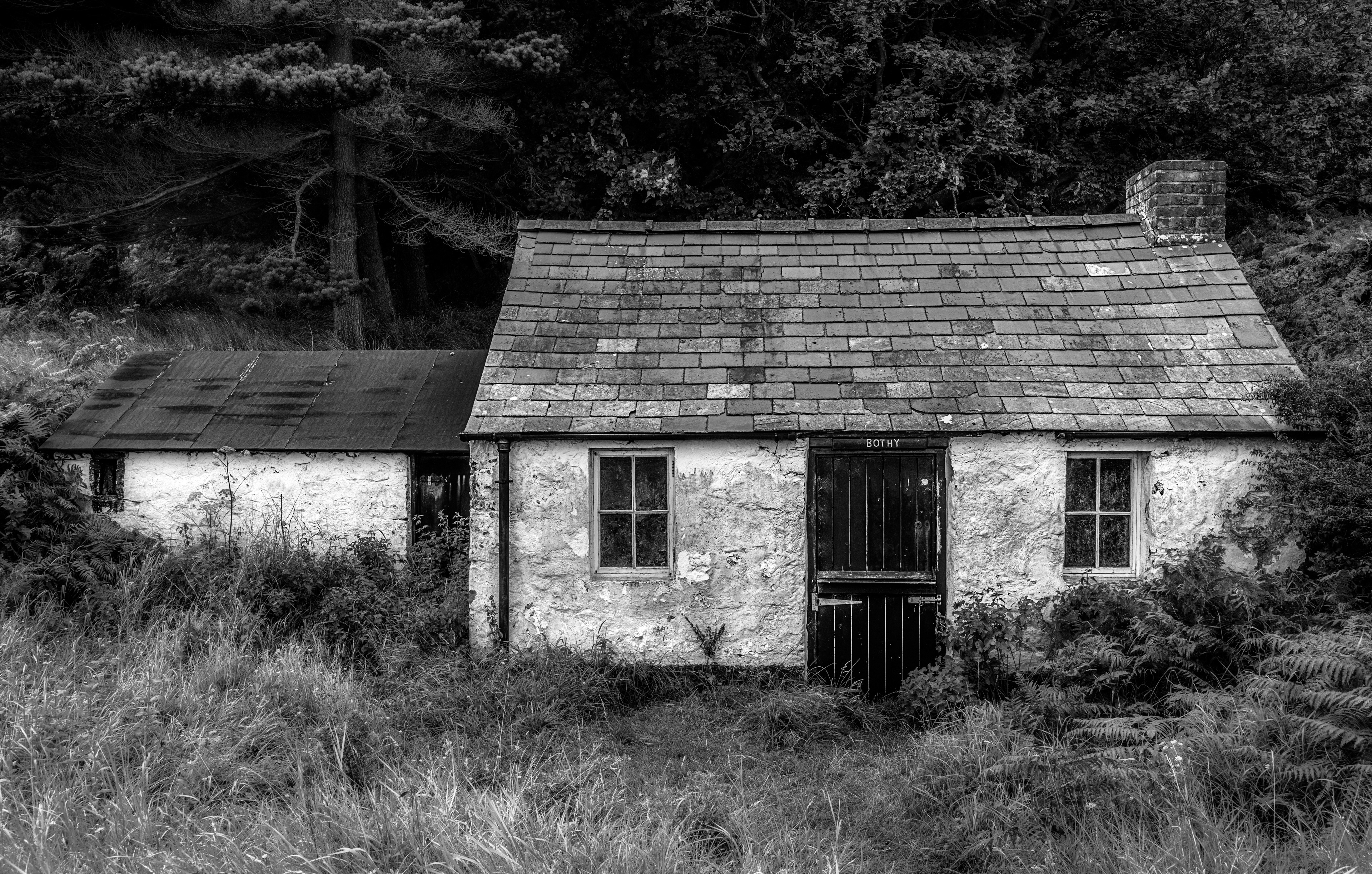
Murlough Bay
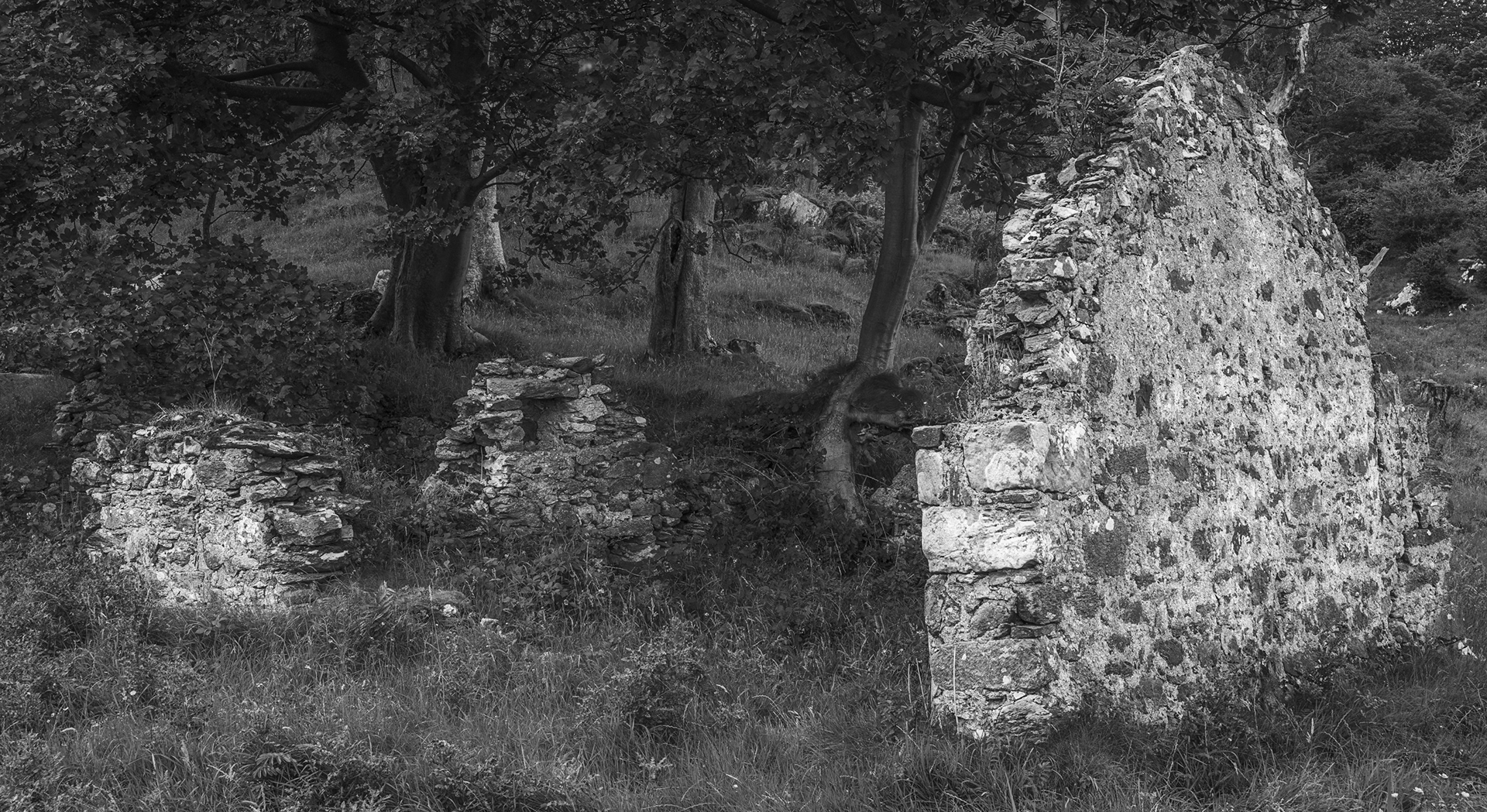
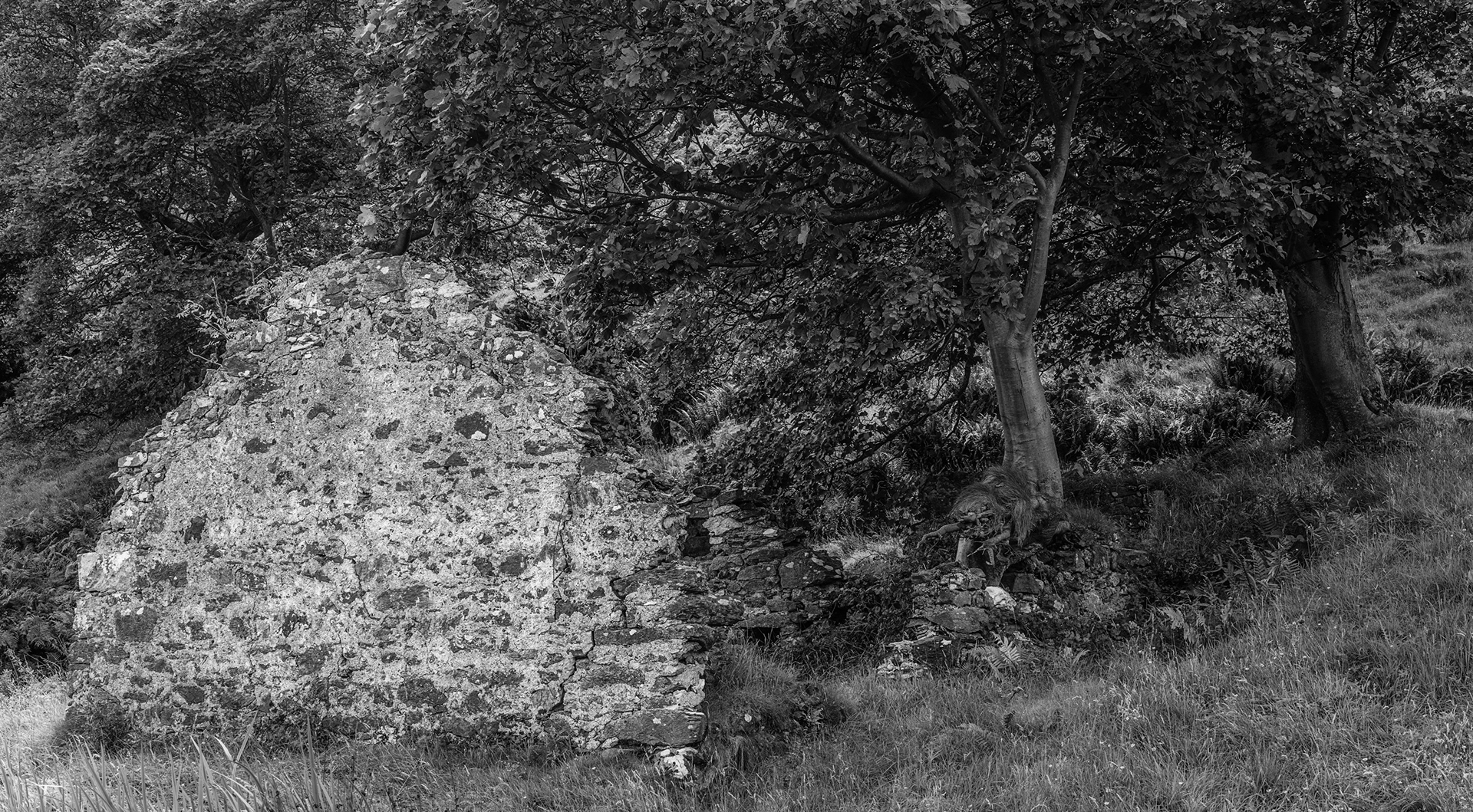
This ruin is very likely to be an old colliery/miners’ cottage tied to the small coal-and-lime works at Murlough Bay (under Fair Head).
Perched above the wild Atlantic swells of Murlough Bay, this weathered ruin is all that remains of a 19th-century miner’s cottage. Once home to families who worked the nearby lime kiln and coal seams beneath Fair Head, the gable now leans into the salt winds, its stonework softened by lichen and time. Encroaching trees weave their branches into the structure, as if nature itself has taken over the role of caretaker.
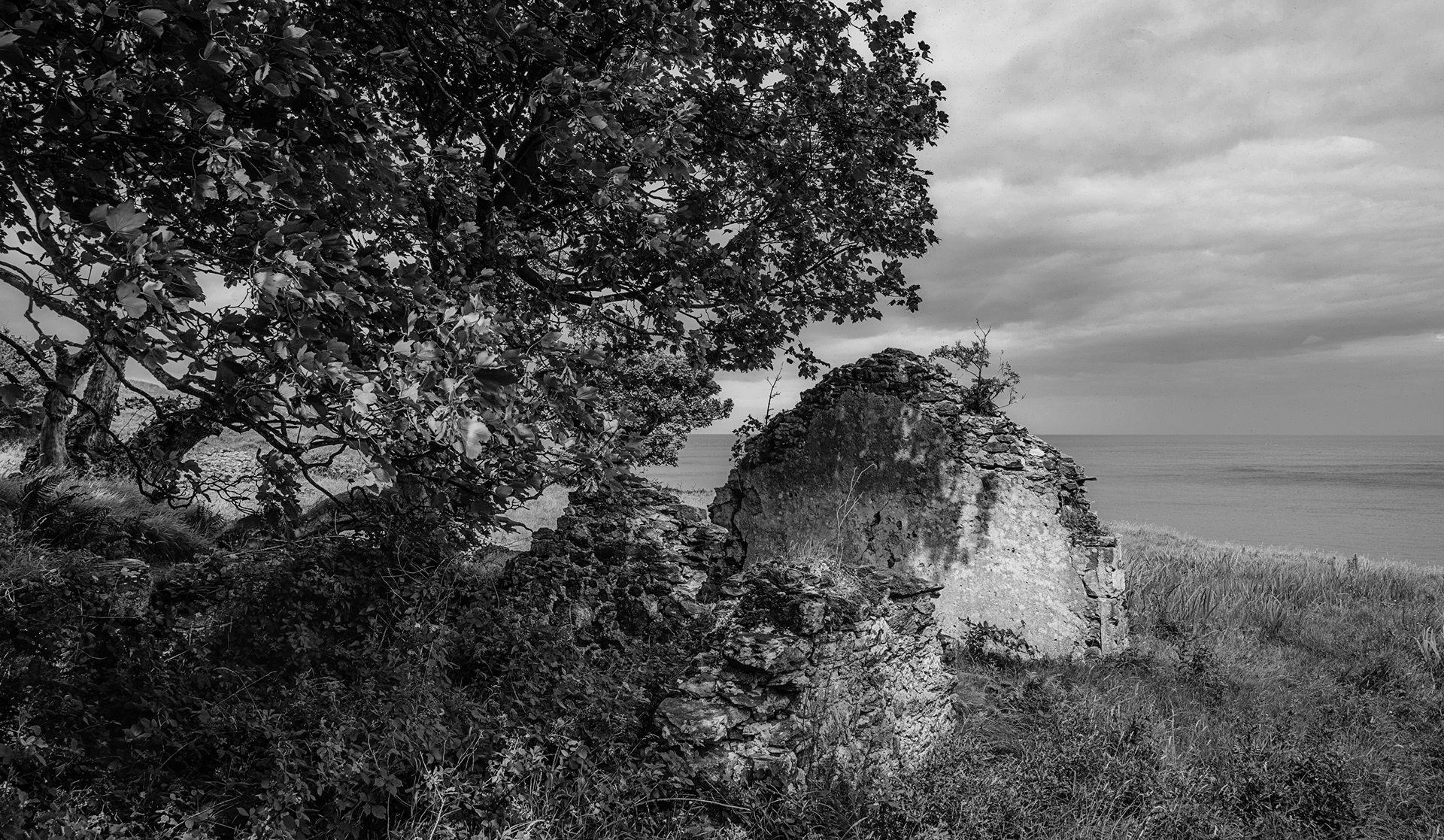
The weathered gable of a former miner’s cottage at Murlough Bay, its stonework scarred by centuries of wind and rain. Trees now rise where walls once sheltered families, a quiet testament to the balance between human industry and nature’s reclamation.
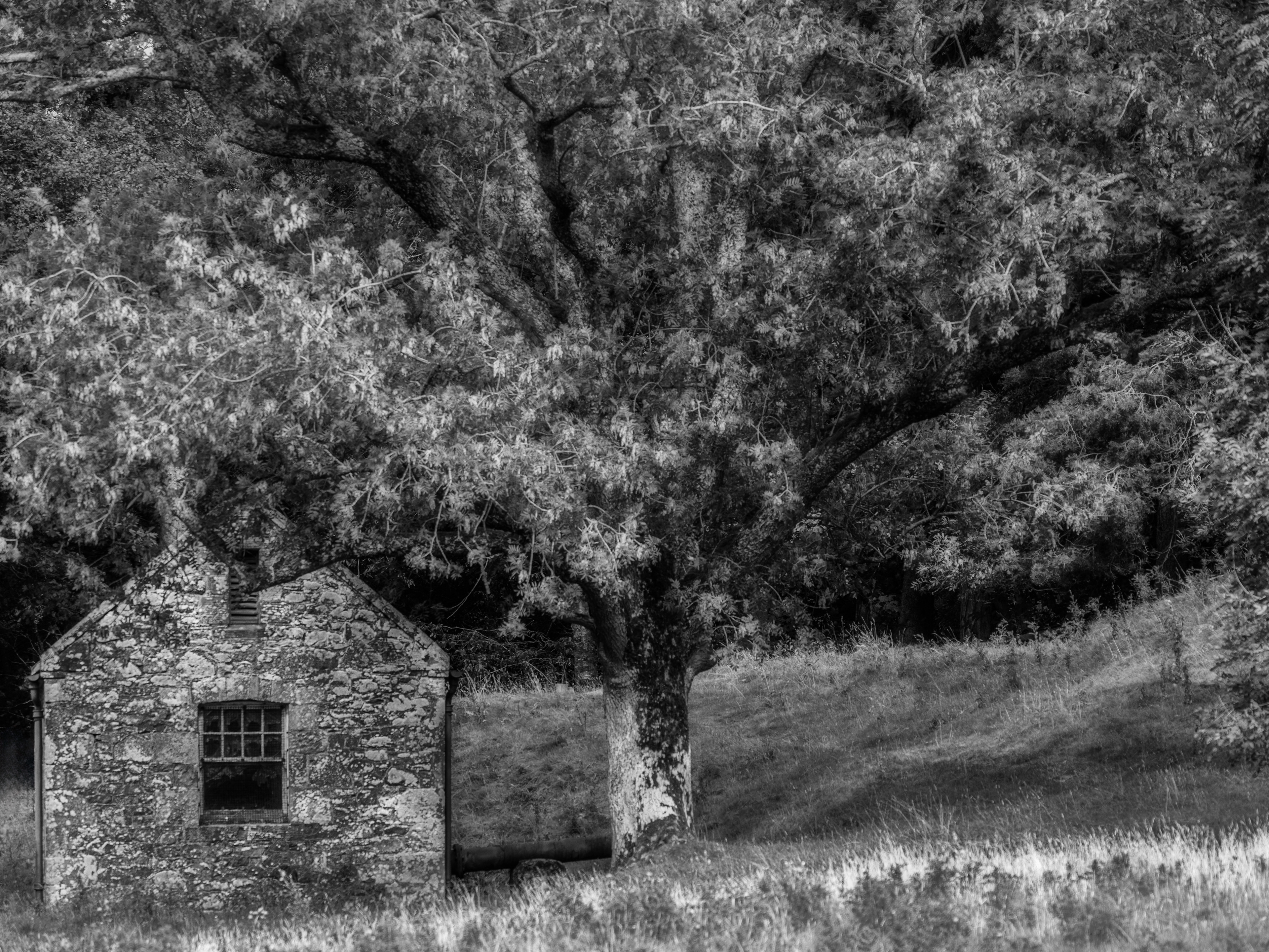
Broughton, Scottish Borders.
These two images are from a small stone building I discovered near Broughton in the Scottish Borders. Tucked beneath the shadow of a beautiful ash tree, the structure seems long forgotten, though its purpose hints at a connection to water, a pipe enters discreetly at the rear.
I was drawn to the way the building blends into its surroundings, its weathered stone slowly softening as nature quietly reclaims the space. The sweeping branches of the ash cast dappled shadows, adding depth and atmosphere to the scene. For me, this place carries a sense of stillness, a reminder of time’s passage and the enduring presence of the landscape around it.
“Beneath the Ash”
Beneath the sheltering canopy of the ash, this forgotten structure rests in quiet obscurity. Its stone walls, softened by time and shadow, seem almost to merge with the surrounding woodland. A lone pipe slips silently into the rear, hinting at a purpose once vital but now long abandoned. Here, nature whispers patiently, reclaiming the space with every drifting leaf and passing season.
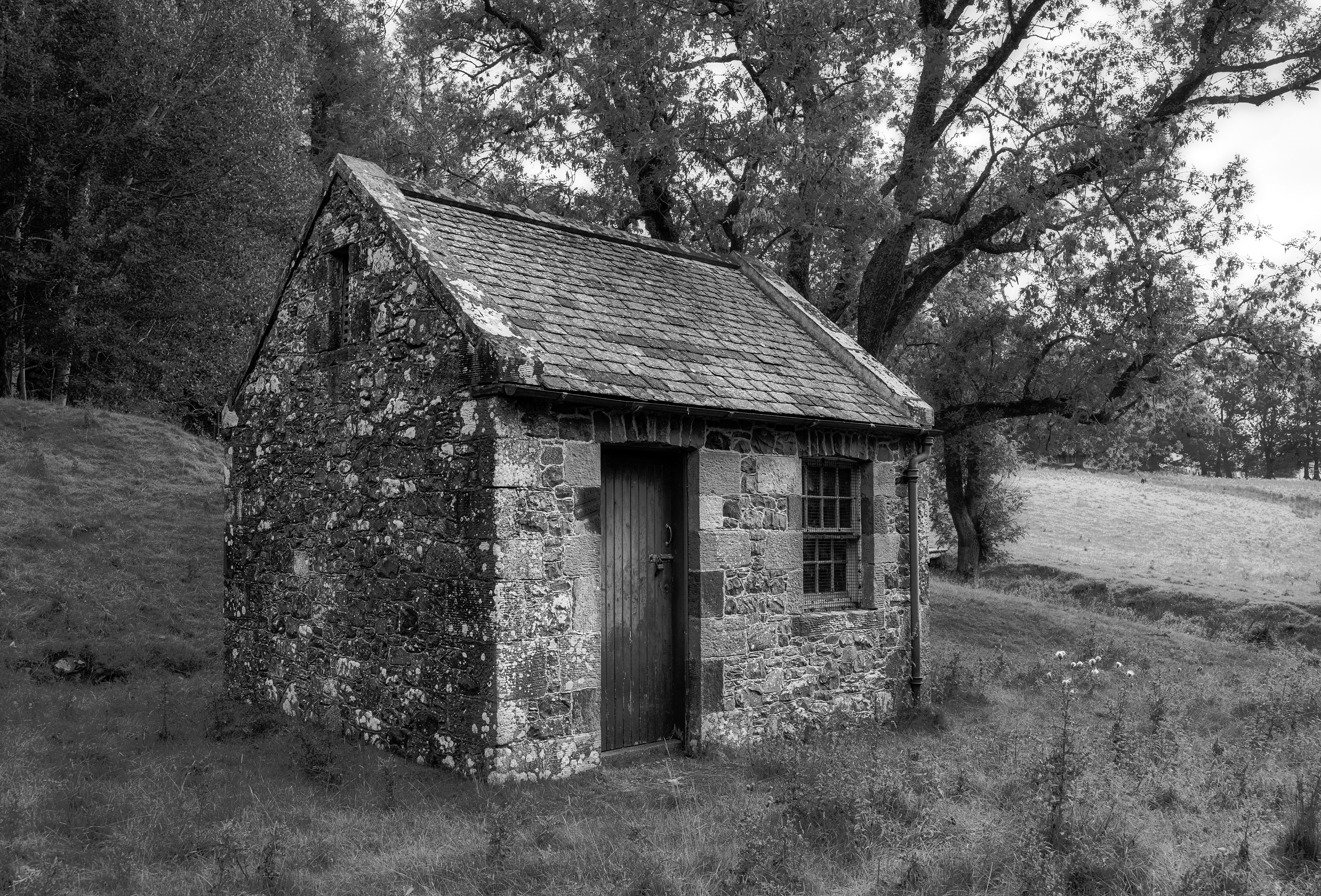
“The Keeper of Water”
Framed by weathered stone and softened by moss, this small building stands as a silent witness to its own history.
The locked door and rusted bars hint at function and utility, yet its story remains untold. Under the watchful branches of the ash, time slows, and the boundary between manmade and natural begins to fade, the wild grasses growing closer, the roots reaching deeper, the walls holding their secrets in quiet dignity.
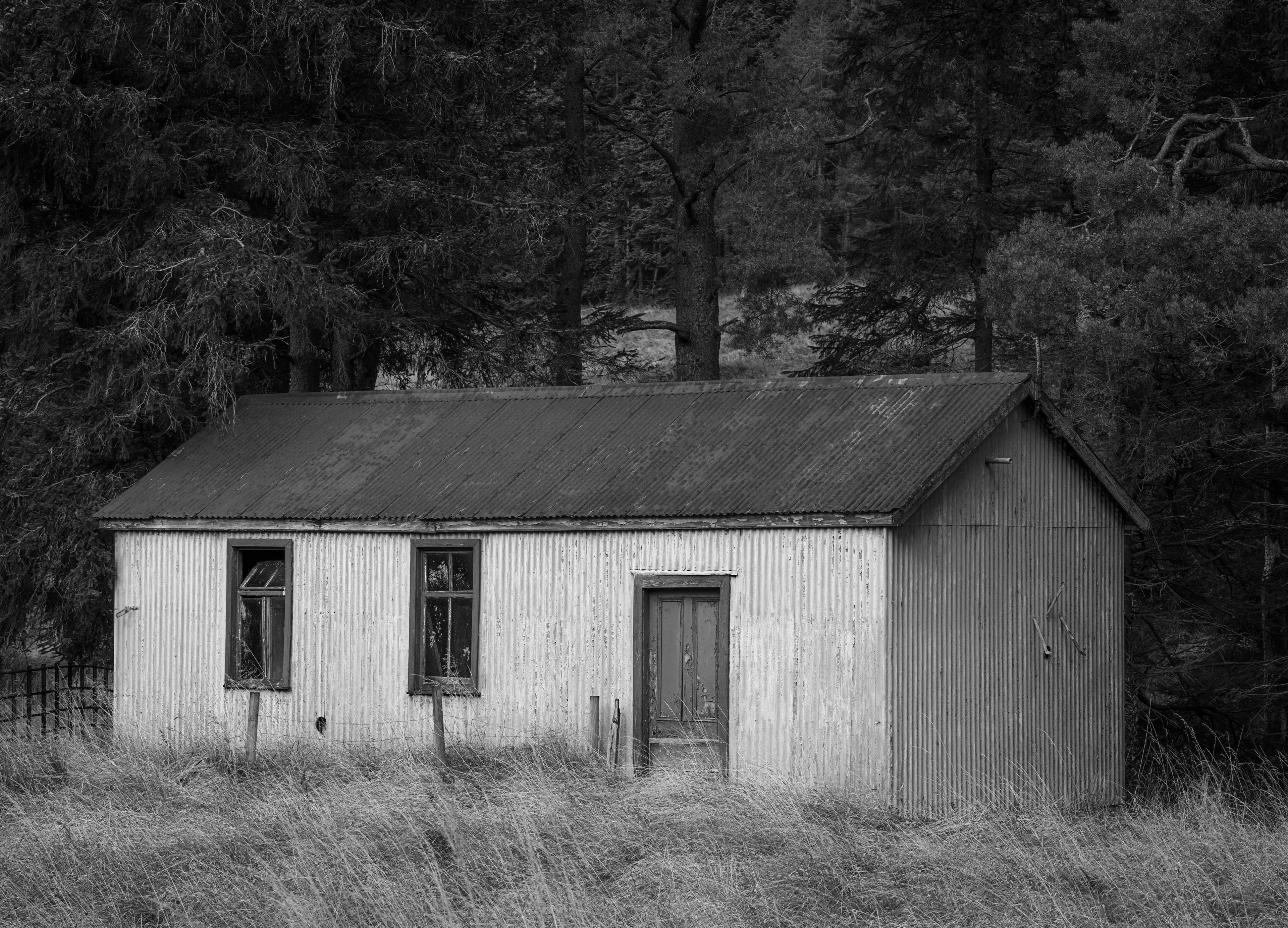
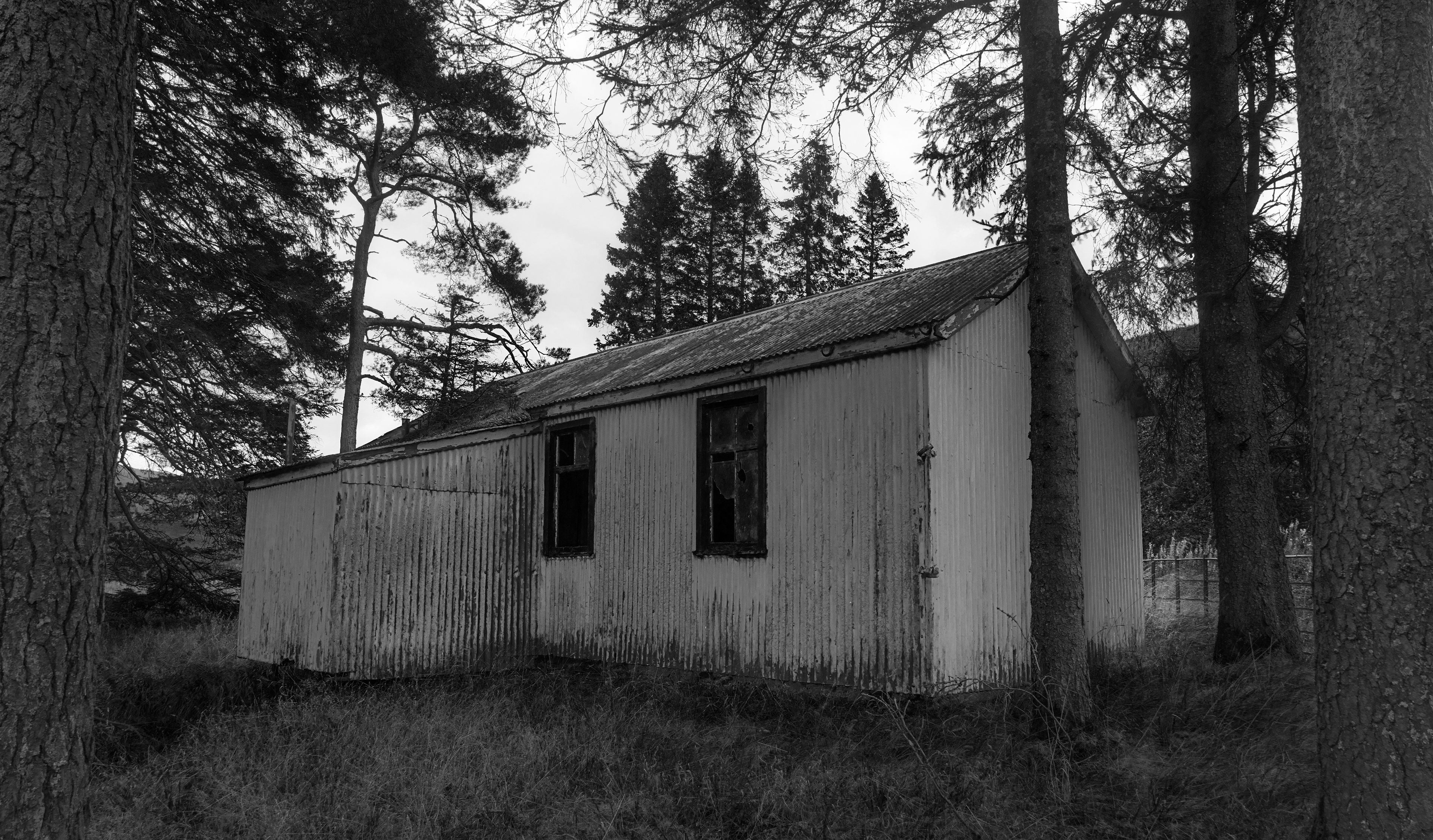
"Corrugated Silence" - Talla Reservoir.
This wooden corrugated house stands at the head of Talla Reservoir, its weathered structure surrounded by trees that now guard it in silence.
Believed to have been connected to the navvies who laboured on the construction of the reservoir, the building is a relic of an intense period of human activity, now long gone.
Stripped back in black and white, the details of its worn walls and broken windows invite reflection on what life might have been like here when it was occupied, when light spilled through its windows and voices filled its rooms.
Now, only the trees remain as witnesses, holding its memory in stillness.
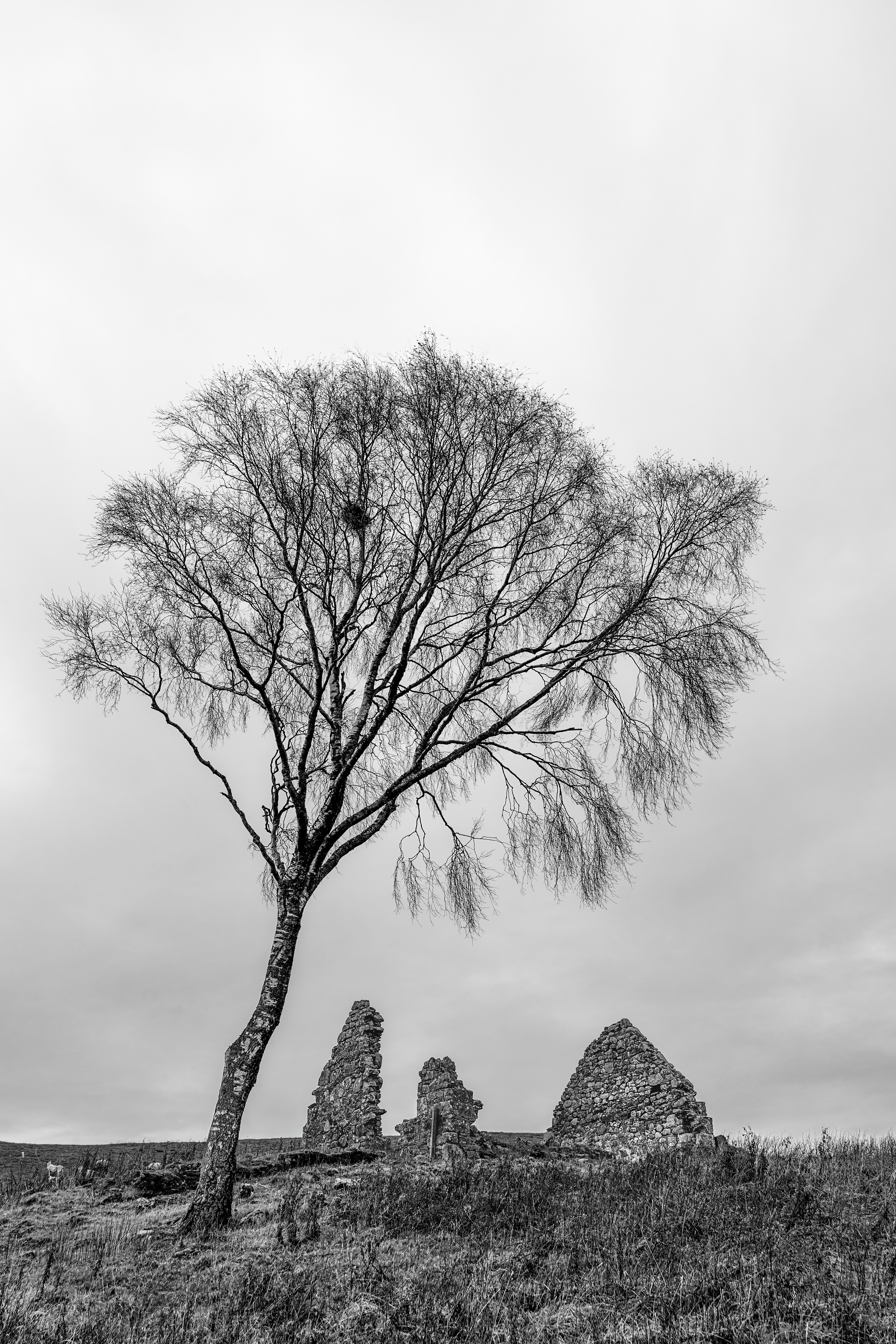
Mount Lothian Ruin – “Birch Over the Bones”
In Mount Lothian, a lone silver birch arches protectively over the last remains of a former home, its gable ends the only structures still standing against time.
The elegant sweep of the birch reaches into the sky like a memory held aloft, its branches echoing the fragility of what once was. Here, the past endures in quiet fragments, watched over by a tree that seems to mourn and shelter in equal measure.
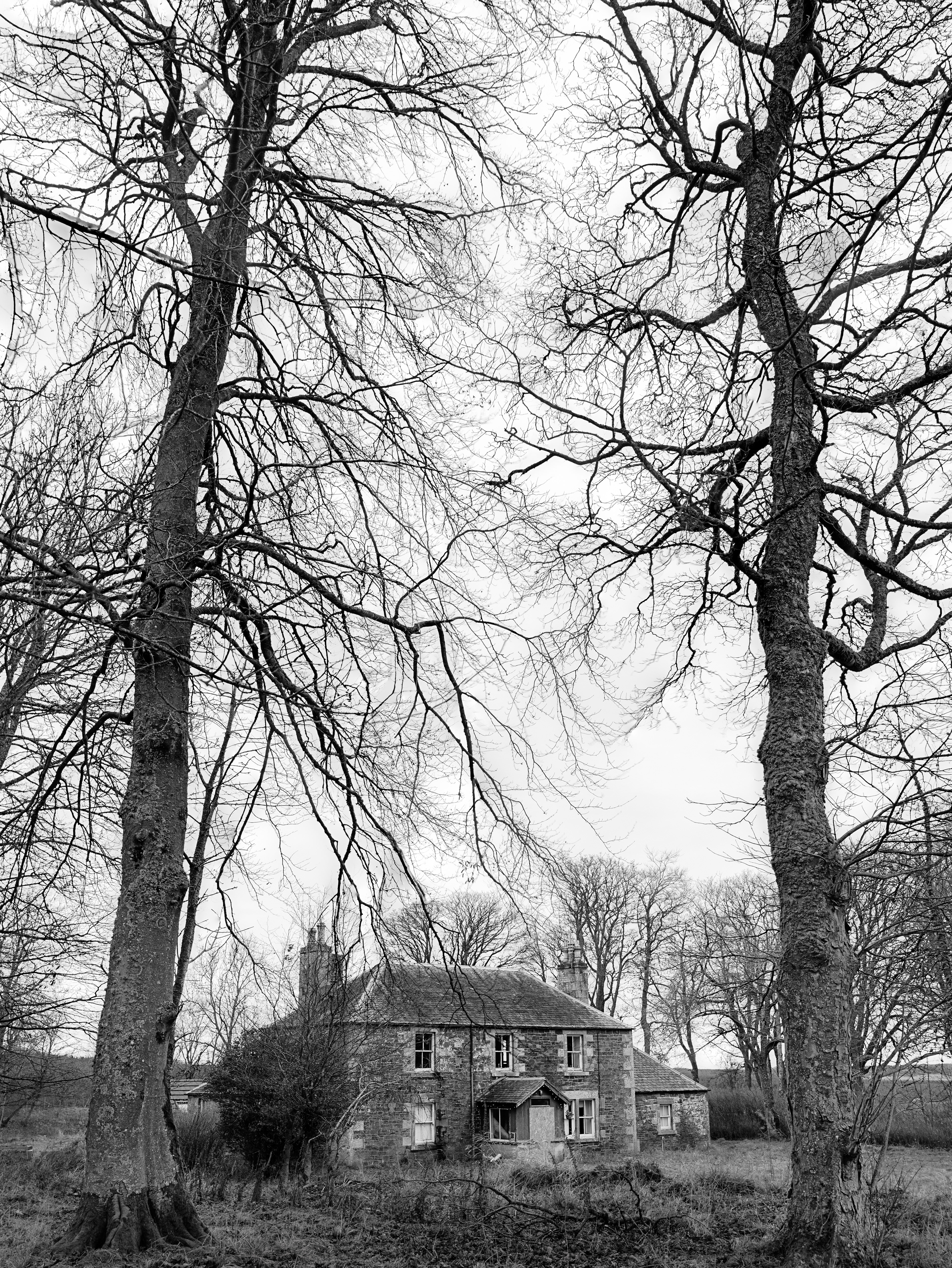
West Loch Farm – “Framed by Beech and Silence”
At West Loch Farm, two towering trees rise like sentinels, framing an abandoned farmhouse that once hummed with daily life. Their bare branches weave a stark lattice above the quiet structure, as though nature itself has taken up the role of guardian. Within this stillness lies the ghost of a family home, its windows dark, its stories lingering in the air between the trees.